The beauty of the McKenzie River goes far beyond its striking clear water and the lush green forests lining its banks. While the river is undeniably scenic, its greatest beauty may be the natural system quietly working beneath the surface—a system that makes it uniquely resilient to the climate challenges facing the rest of the American West.
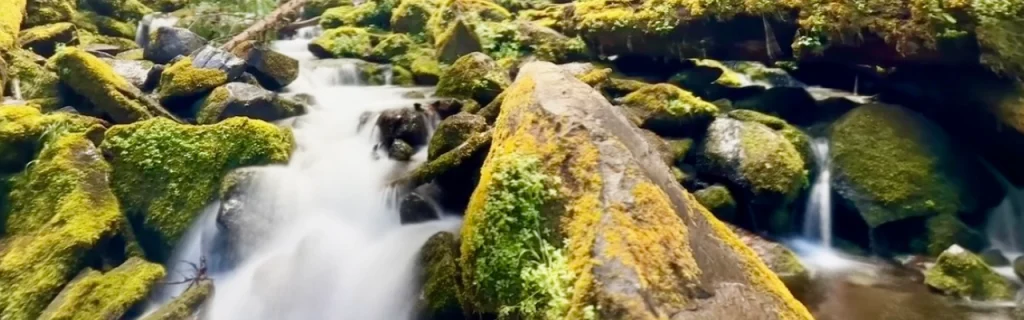
A “Geologic Gift” Hidden Beneath the Cascades
The McKenzie is sustained by what U.S. Forest Service hydrologist and fluvial geomorphologist Gordon Grant calls a “geologic gift:” a vast underground aquifer stored within the young volcanic rock of Oregon’s High Cascades.
Stretching from around Mount Jefferson to south of McKenzie Pass, this enormous aquifer holds more than 80 cubic kilometers of water. Scientists first began to understand its scale through deep geothermal test holes drilled throughout the Cascades decades ago. Instead of finding the hot temperatures they expected, researchers discovered something surprising: extremely cold temperatures deep underground, evidence of massive amounts of water. The phenomenon became known as the “rain curtain.”
A Giant Natural Sponge with a Ten-Year Delay
Rainfall and melting snowpack seep into the porous volcanic landscape, where water slowly moves through cracks and layers of rock. Rather than immediately rushing downstream, isotopic dating suggests the water spends around a decade underground before emerging again through the region’s famous Great Spring, which feeds Clear Lake.
These volcanic landscapes act like a giant natural sponge, steadily releasing cold, clean water throughout the year. It is one of the primary reasons the McKenzie continues flowing strong long after Oregon’s seasonal summer rains disappear.
Natural Resilience in a Changing Climate
While many Western rivers face increasingly low water levels during prolonged drought and years of declining snowpack, the McKenzie benefits from this immense underground reservoir. Flows still fluctuate seasonally, but the river’s aquifer-fed system helps protect it from drying up entirely, serving as a vital ecological buffer.
What This Means for Summer Travelers and River Recreation
So, what does this “geologic gift” mean for summer travelers, anglers, and outdoor enthusiasts? It means that while drought may restrict activities on other regional waterways, the McKenzie River remains reliably open for business.
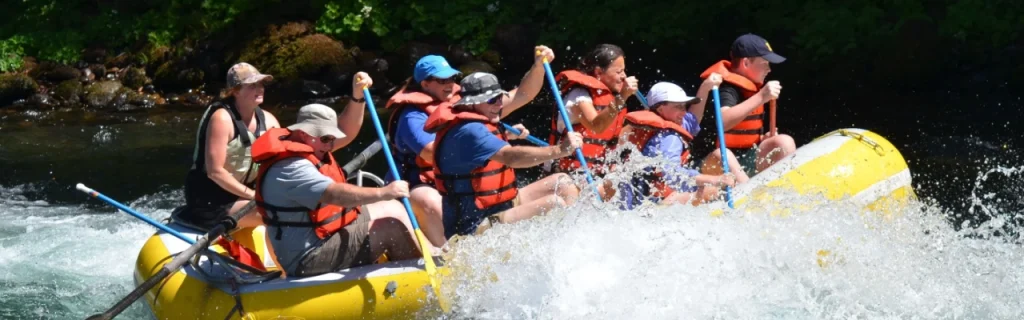
Whether you are booking a thrilling late-August whitewater rafting trip, seeking a peaceful kayaking excursion, or fly-fishing for pristine native trout, our volcanic aquifer ensures that the river’s water levels—and its signature bone-chilling clarity—remain dependable all summer long. When you step into a boat on the McKenzie, you aren’t just enjoying today’s weather; you are riding a decade-old current, perfectly preserved by nature just for this moment.
About the Author:
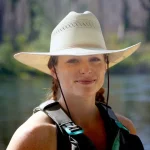
Leah Helfrich is a multi-generational boater, river guide, and co-leader of Helfrich McKenzie Rafting. Having guided on premier Pacific Northwest rivers since the age of 16, Leah couples her lifelong passion for whitewater with a deep commitment to the environmental stewardship of the McKenzie River. She holds a master’s degree in criminology and criminal justice and lives in Oregon. To book a guided rafting or fishing trip on the McKenzie, visit her at Helfrich McKenzie Rafting.
Related Links: